
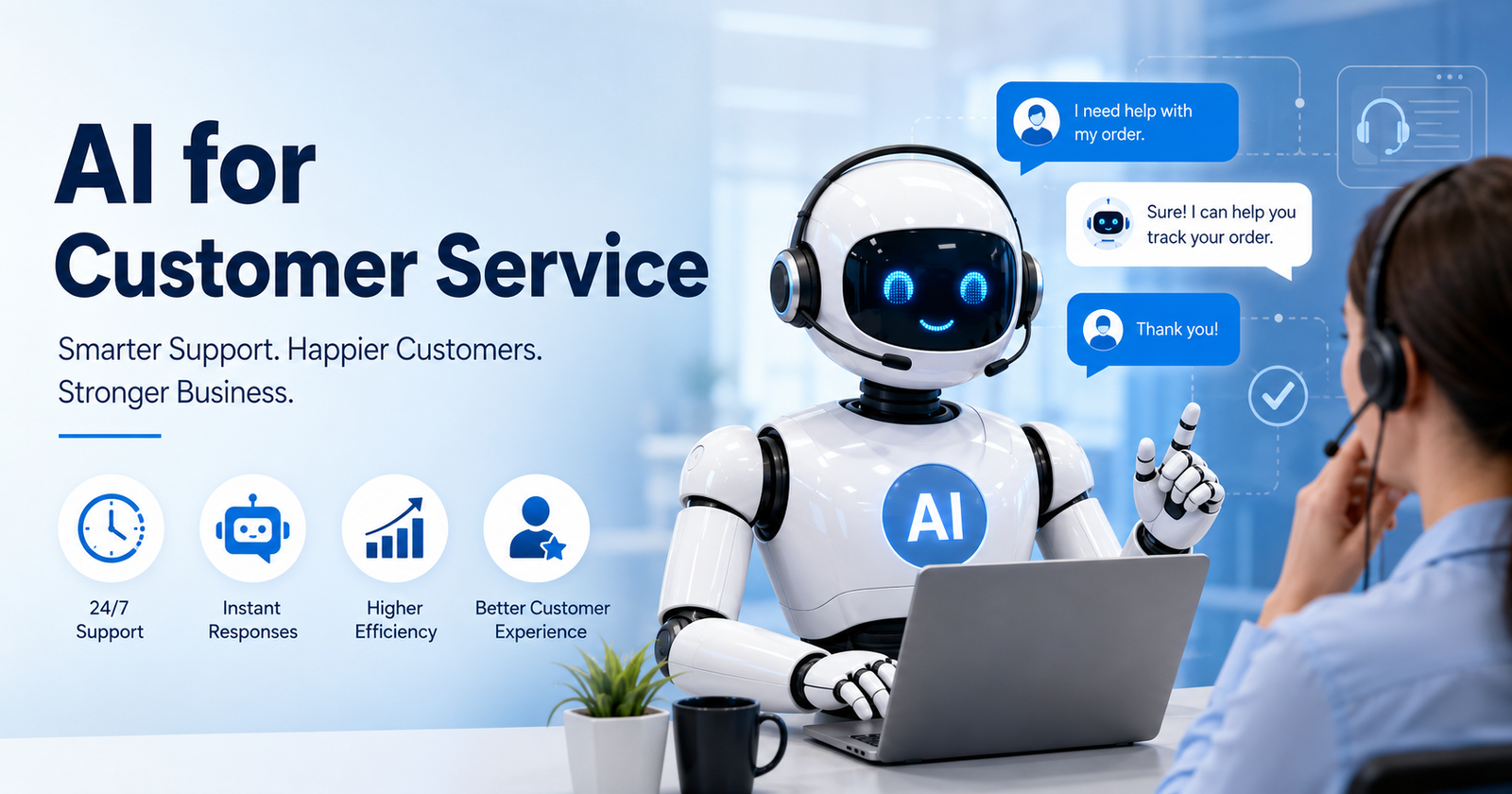
AI for Customer Service: A Complete Guide for Modern Businesses
Customer service plays a major role in the success of any business. Customers expect fast replies, quick solutions, and personalized support. Meeting these expectations can be difficult when support teams handle hundreds or thousands of requests every day. This is where AI for customer service is making a big difference.
Businesses now use artificial intelligence to answer questions, solve common problems, and provide support around the clock. AI tools help companies reduce waiting times and improve customer experiences. They also allow support agents to focus on more complex issues that require human attention.
As technology continues to grow, more companies are adopting AI-powered customer support systems. From chatbots to virtual assistants, AI is changing the way businesses interact with customers. Understanding how AI works in customer service can help companies improve efficiency while keeping customers happy.
What Is AI for Customer Service?
AI for customer service refers to the use of artificial intelligence technologies to support and improve customer interactions. These technologies can understand customer questions, provide answers, and assist support teams in handling requests more efficiently.
AI systems use technologies such as machine learning, natural language processing, and automation. These tools help computers understand human language and respond in a way that feels natural. As a result, customers can receive support without waiting for a human representative.
Many businesses use AI through chatbots, virtual assistants, automated email systems, and intelligent help desks. These tools can answer frequently asked questions, track orders, provide product information, and help customers solve common issues.
The main goal of AI for customer service is to improve customer experiences while reducing the workload on support teams. Companies can provide faster responses and consistent support while saving time and resources. As AI continues to improve, customer service becomes more efficient and accessible for both businesses and customers.
Why AI for Customer Service Is Becoming More Popular
The growing demand for instant support has increased the adoption of AI for customer service. Customers no longer want to wait hours or days for a response. They expect quick answers regardless of the time or day.
Businesses face increasing pressure to manage large numbers of customer inquiries. Hiring more support agents can be expensive and difficult to scale. AI provides a cost-effective solution by handling routine tasks automatically.
Another reason for the popularity of AI is its ability to provide support twenty-four hours a day. Unlike human teams, AI systems never need breaks and can assist customers at any time. This ensures that customers receive help whenever they need it.
AI also improves consistency in customer interactions. Every customer receives accurate information based on company guidelines. This helps reduce mistakes and creates a more reliable support experience. As businesses seek ways to improve customer satisfaction while controlling costs, AI continues to become a valuable tool in customer service operations.
How AI for Customer Service Works
Understanding how AI for customer service works helps businesses see its value. AI systems use advanced algorithms to process customer questions and identify the most appropriate responses.
When a customer submits a question through chat, email, or messaging platforms, the AI analyzes the message. Natural language processing allows the system to understand the meaning behind the words. It then searches its knowledge base for the best answer.
Machine learning enables AI systems to improve over time. As they handle more customer interactions, they learn patterns and become more accurate. This continuous learning process helps AI deliver better responses and support.
AI can also integrate with customer relationship management systems. This allows the software to access customer history and provide personalized assistance. For example, AI can identify previous purchases, support tickets, and preferences.
The combination of automation, language understanding, and learning capabilities makes AI a powerful solution for modern customer support environments.
Main Benefits of AI for Customer Service
Businesses that implement AI for customer service often experience significant improvements in both efficiency and customer satisfaction. AI provides advantages that benefit customers and support teams alike.
| Benefit | Description |
|---|---|
| Faster Responses | Customers receive answers instantly. |
| 24/7 Support | Assistance is available at all times. |
| Lower Costs | Businesses reduce support expenses. |
| Better Efficiency | Agents focus on complex issues. |
| Consistent Service | Customers receive accurate information. |
| Scalability | AI handles large volumes of requests. |
One of the biggest benefits is speed. Customers appreciate immediate responses rather than waiting in long support queues. Faster support often leads to higher satisfaction rates.
AI also helps businesses manage growth. As customer inquiries increase, AI systems can handle larger workloads without requiring major staffing increases. This scalability makes AI particularly useful for growing businesses.
In addition, AI reduces repetitive work for support agents. Instead of answering the same questions repeatedly, human representatives can focus on solving more complicated customer concerns.
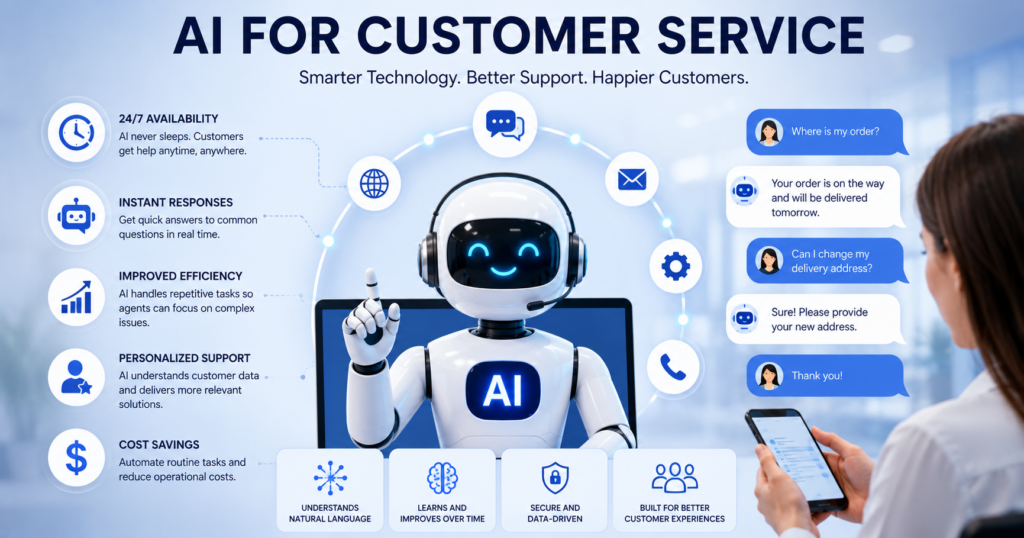
AI Chatbots in Customer Service
One of the most common applications of AI for customer service is the use of chatbots. AI chatbots interact with customers through websites, mobile apps, and messaging platforms.
Modern chatbots can answer a wide range of customer questions. They can provide product information, process simple requests, help with account issues, and guide customers through common procedures. Many chatbots can understand natural language, making conversations feel more human.
Businesses benefit from chatbots because they can handle multiple conversations at the same time. Human agents can only assist a limited number of customers simultaneously, while AI chatbots can support thousands of users.
Chatbots also improve customer experiences by reducing wait times. Customers receive immediate assistance without needing to wait for an available representative. If a chatbot cannot solve an issue, it can transfer the conversation to a human agent.
As chatbot technology advances, businesses continue to use them as a key part of their customer service strategy.
AI for Customer Service and Personalization
Personalization has become an important factor in customer satisfaction. AI for customer service helps businesses provide more personalized experiences by analyzing customer data and preferences.
AI systems can review previous interactions, purchase history, and customer behavior. Using this information, they can offer relevant recommendations and customized support. Customers feel valued when businesses understand their needs and preferences.
For example, an AI assistant can recommend products based on previous purchases. It can also provide support that reflects the customer’s history with the company. This creates a smoother and more efficient experience.
Personalized support often leads to stronger customer relationships. Customers are more likely to trust companies that provide relevant and helpful assistance. AI makes personalization possible at a large scale, even for businesses with thousands of customers.
By combining automation with customer insights, AI helps companies deliver support that feels more tailored and engaging.
Challenges of Using AI for Customer Service
While AI for customer service offers many benefits, businesses should also understand its challenges. AI is powerful, but it is not perfect.
Some customer issues are too complex for AI systems to handle effectively. In these situations, human support agents remain essential. Customers may become frustrated if they cannot reach a person when needed.
AI systems also depend on high-quality data. Poor training data can lead to inaccurate responses and misunderstandings. Businesses must regularly update and improve their AI tools to maintain performance.
Privacy concerns are another challenge. AI systems often process customer information, making data security extremely important. Companies must follow privacy regulations and protect customer data.
Despite these challenges, most businesses find that the benefits outweigh the limitations. A balanced approach that combines AI and human support often delivers the best results.
The Future of AI for Customer Service
The future of AI for customer service looks promising. Advances in artificial intelligence continue to improve the quality of customer interactions. AI systems are becoming more conversational, accurate, and capable of understanding customer emotions.
Voice assistants are expected to play a larger role in customer support. Customers may increasingly interact with AI through voice rather than text. This can create more natural and convenient experiences.
Predictive support is another emerging trend. AI may identify potential customer issues before they occur and provide proactive solutions. This approach can improve customer satisfaction and reduce support requests.
Businesses will also continue to use AI for advanced analytics. By analyzing customer interactions, companies can gain valuable insights into customer needs and behavior.
As technology evolves, AI for customer service will become even more important for businesses that want to remain competitive and deliver exceptional support experiences.
Conclusion
AI for customer service is transforming the way businesses support their customers. It helps companies provide faster responses, improve efficiency, reduce costs, and deliver personalized experiences. From AI chatbots to intelligent virtual assistants, businesses can use artificial intelligence to meet growing customer expectations.
While AI has some limitations, it works best when combined with human expertise. This balanced approach ensures that customers receive both efficient automation and personal support when needed.
As artificial intelligence continues to advance, businesses that invest in AI for customer service will be better positioned to improve customer satisfaction and stay ahead of the competition.
Frequently Asked Questions
What is AI for customer service?
AI for customer service uses artificial intelligence technologies to automate support tasks, answer customer questions, and improve customer experiences.
How do AI chatbots help customer service?
AI chatbots provide instant responses, handle common questions, reduce waiting times, and allow support agents to focus on complex issues.
Can AI replace human customer service agents?
AI can automate many routine tasks, but human agents are still important for handling complex situations and providing personalized assistance.
Is AI for customer service expensive?
The cost depends on the solution and business size. Many companies find that AI reduces long-term support costs by improving efficiency.
What industries use AI for customer service?
Industries such as e-commerce, banking, healthcare, telecommunications, travel, and retail commonly use AI for customer service to improve customer support and satisfaction.