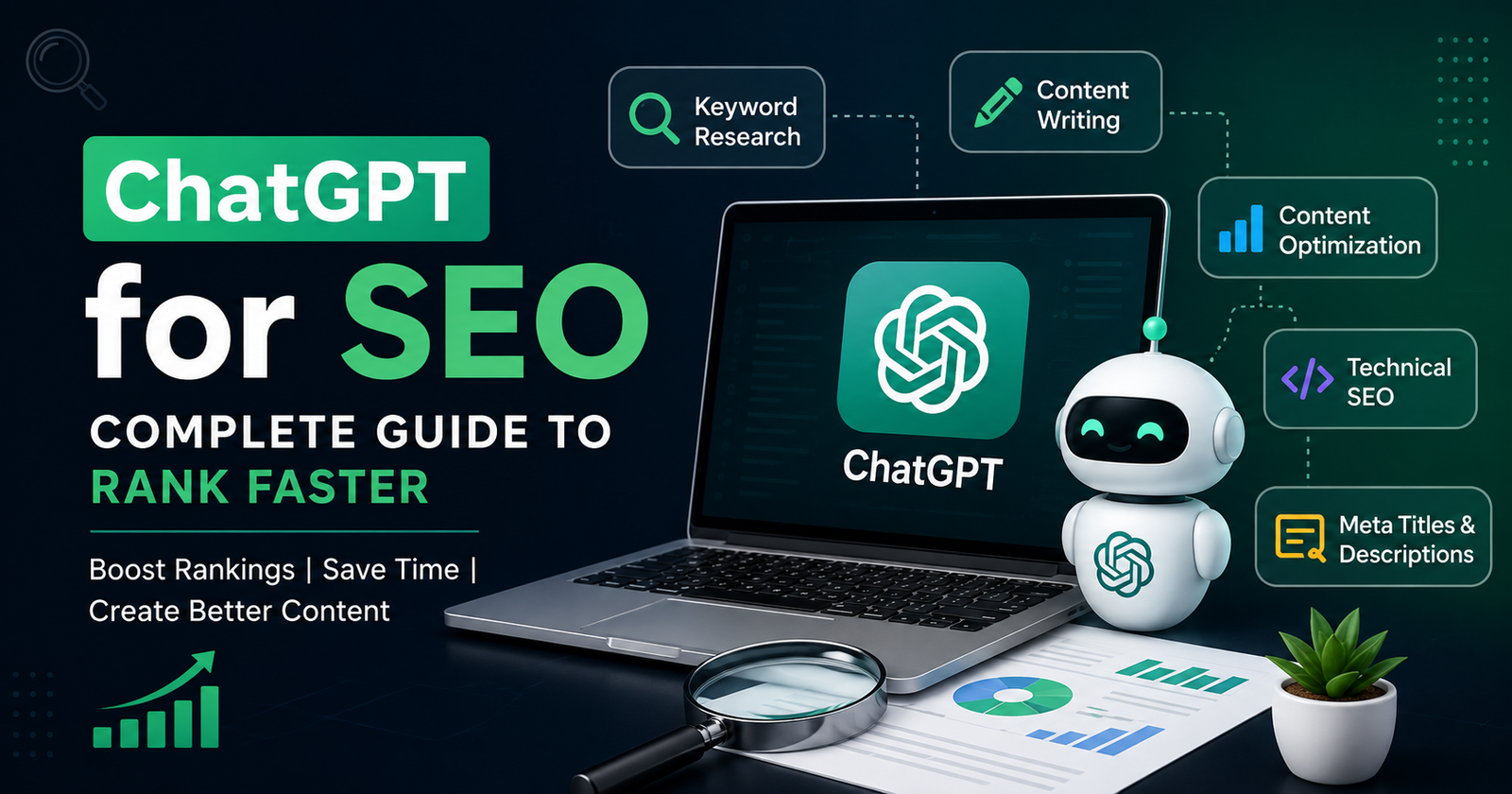
Search engine optimization keeps changing every year. Website owners, bloggers, and marketers now use AI tools to save time and improve their work. One of the most popular tools today is ChatGPT. Many people use ChatGPT for SEO because it helps with content creation, keyword research, topic ideas, and website optimization.
ChatGPT does not replace SEO experts. However, it makes many SEO tasks easier and faster. It helps writers create content outlines, generate blog ideas, write meta descriptions, and improve readability. When used correctly, ChatGPT for SEO can improve productivity and help websites grow faster.
In this guide, you will learn how ChatGPT for SEO works, its benefits, limitations, and the best ways to use it for better search engine rankings.
What Is ChatGPT for SEO?
ChatGPT for SEO means using ChatGPT to support search engine optimization tasks. It helps users create content, find keyword ideas, improve website pages, and build better content strategies.
SEO requires a lot of research and writing. Many website owners spend hours creating blog posts and optimizing pages. ChatGPT reduces this workload by generating ideas and content suggestions within seconds.
The tool can help create titles, meta descriptions, FAQs, blog outlines, and content briefs. It can also simplify complex topics and improve article structure. This makes it useful for beginners and experienced marketers.
Many businesses use ChatGPT for SEO because it helps them publish content more consistently. Search engines reward websites that regularly provide useful information. By speeding up content creation, ChatGPT helps businesses maintain a strong publishing schedule.
While ChatGPT is powerful, it should always be combined with human editing and SEO research. This creates more accurate and useful content for readers.
Why ChatGPT for SEO Is Becoming Popular
The popularity of ChatGPT for SEO continues to grow because it saves time and increases efficiency. SEO professionals often manage many tasks at once. They need to research keywords, create content, optimize pages, and analyze competitors.
ChatGPT helps simplify these tasks. Instead of spending hours brainstorming topics, users can generate dozens of ideas instantly. This allows marketers to focus more on strategy and content quality.
Another reason for its popularity is cost savings. Many small businesses cannot afford large SEO teams. ChatGPT provides support that helps them produce content at a lower cost.
The tool also improves productivity. Writers can overcome writer’s block and create first drafts quickly. Bloggers can generate article structures and FAQs in minutes.
The table below shows some common uses of ChatGPT for SEO.
| SEO Task | How ChatGPT Helps |
|---|---|
| Keyword Research | Generates keyword ideas |
| Content Writing | Creates drafts and outlines |
| Meta Descriptions | Writes optimized descriptions |
| FAQ Creation | Generates user questions |
| Content Optimization | Improves readability |
| Technical SEO | Assists with schema and code |
Because of these benefits, more businesses are including ChatGPT in their SEO workflows.
Using ChatGPT for SEO Keyword Research
Keyword research is one of the most important parts of SEO. Without the right keywords, content may never reach its target audience.
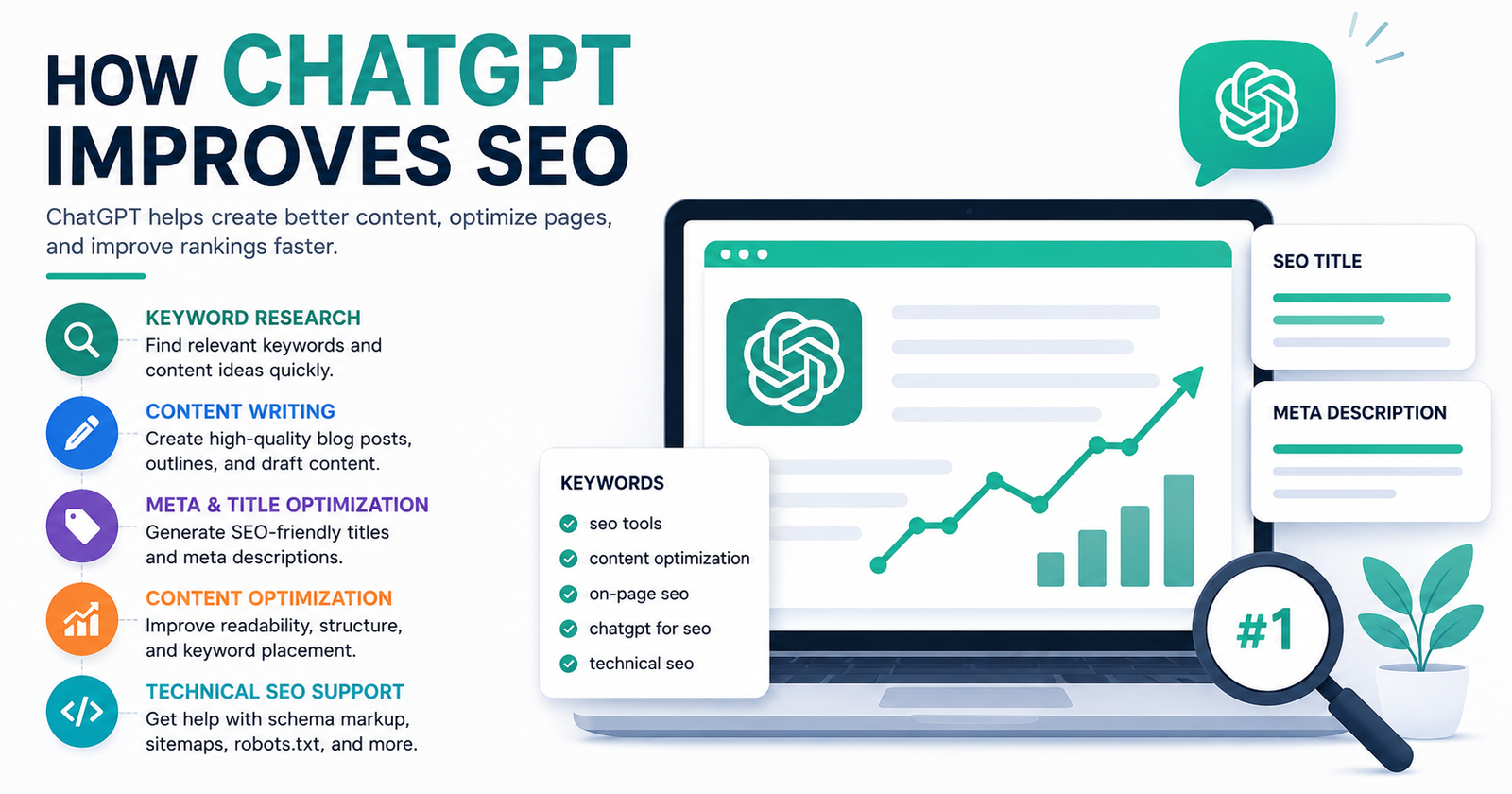
ChatGPT for SEO helps users discover keyword ideas quickly. Users can enter a primary keyword and ask for related keywords, long-tail keywords, question-based keywords, and topic clusters.
For example, if your keyword is “digital marketing,” ChatGPT can generate dozens of related search terms. This makes it easier to identify content opportunities.
Long-tail keywords are especially useful because they often have lower competition. These keywords target specific user intent and can bring highly relevant traffic.
ChatGPT can also help group keywords into categories. This process is called keyword clustering. It helps website owners build content around a complete topic rather than focusing on a single keyword.
Although ChatGPT helps with brainstorming, it should be used alongside keyword research tools. Search volume, competition, and ranking difficulty still require data from dedicated SEO platforms.
Combining data-driven research with ChatGPT’s creative suggestions creates a stronger SEO strategy.
How ChatGPT for SEO Improves Content Writing
Content remains one of the strongest ranking factors in SEO. Search engines reward useful, relevant, and high-quality content.
ChatGPT for SEO helps writers create content faster without starting from scratch. It can generate blog outlines, introductions, headings, and first drafts.
Many writers use ChatGPT to organize their ideas before writing. A clear structure improves readability and user experience. Search engines often favor content that is easy to understand.
ChatGPT also helps maintain consistency across articles. This is important for websites that publish content regularly.
Another benefit is content expansion. Writers can take a short paragraph and ask ChatGPT to expand it with more details. This helps create comprehensive articles that cover topics more thoroughly.
However, publishing AI-generated content without editing is not recommended. Human review ensures accuracy, originality, and brand voice.
The best approach is to use ChatGPT as a writing assistant rather than a complete replacement for human writers.
Creating SEO Titles and Meta Descriptions with ChatGPT
SEO titles and meta descriptions influence how users interact with search results. They often determine whether someone clicks your page or chooses another result.
ChatGPT for SEO helps create compelling titles that include target keywords naturally. It can generate multiple title options for testing and optimization.
Meta descriptions are equally important. A strong description encourages users to visit your website. ChatGPT can write concise descriptions that summarize the content and include the primary keyword.
A good title should be clear, relevant, and attractive. It should accurately describe the content while encouraging clicks.
The same applies to meta descriptions. They should provide value and create interest without sounding misleading.
Using ChatGPT for these tasks saves time and helps marketers generate fresh ideas. It also makes it easier to optimize large websites with hundreds of pages.
When combined with keyword research, optimized titles and descriptions can improve click-through rates and overall SEO performance.
ChatGPT for SEO Content Optimization
Publishing content is only the beginning. Content also needs optimization to perform well in search results.
ChatGPT for SEO helps improve content quality by identifying weak sections, improving readability, and suggesting additional information.
Search engines favor content that answers user questions clearly. ChatGPT can help expand explanations and provide more detailed answers.
The tool can also help improve keyword placement. Proper keyword usage helps search engines understand page topics. However, keyword stuffing should always be avoided.
Another useful feature is readability improvement. ChatGPT can rewrite complicated sentences using simpler language. This creates a better user experience and keeps visitors engaged longer.
Content optimization also includes updating old articles. Many websites use ChatGPT to refresh outdated content and maintain relevance.
Regular optimization ensures that content remains useful and competitive in search results.
Technical SEO Tasks Supported by ChatGPT
Technical SEO can feel difficult for beginners. ChatGPT helps simplify many technical tasks by providing explanations and code examples.
Website owners often use ChatGPT for SEO to create schema markup, robots.txt files, XML sitemap guidance, and structured data suggestions.
The tool can explain technical concepts in simple language. This makes it easier for beginners to understand SEO fundamentals.
ChatGPT also assists with troubleshooting common SEO issues. Users can describe a problem and receive possible solutions.
Although ChatGPT can support technical SEO, users should still verify recommendations before implementing changes. Website errors can affect rankings and performance.
Technical SEO works best when combined with professional tools and website audits. ChatGPT acts as a helpful assistant rather than a complete technical solution.
For many small website owners, this support makes technical SEO much less intimidating.
Benefits of Using ChatGPT for SEO
The biggest advantage of ChatGPT for SEO is speed. Tasks that once required hours can now be completed in minutes.
The tool improves productivity by helping users brainstorm ideas quickly. It reduces writer’s block and provides inspiration when creativity slows down.
Another benefit is scalability. Businesses can create more content without dramatically increasing costs. This helps websites grow faster and target more keywords.
ChatGPT also supports learning. Beginners can ask SEO questions and receive detailed explanations instantly. This helps them build knowledge while working on real projects.
The table below highlights key advantages.
| Benefit | Impact |
| Faster Content Creation | Saves time |
| Better Content Planning | Improves structure |
| Keyword Ideas | Expands topic coverage |
| Cost Efficiency | Reduces expenses |
| SEO Learning Support | Improves knowledge |
These advantages make ChatGPT a valuable addition to modern SEO workflows.
Limitations of ChatGPT for SEO
Despite its benefits, ChatGPT for SEO has limitations. Understanding these limitations helps users avoid mistakes.
The tool does not provide real-time keyword volume data. It cannot replace professional SEO platforms for detailed analytics.
ChatGPT may also generate inaccurate information. Users should always fact-check important details before publishing content.
Another limitation is originality. Many people use similar prompts, which can produce generic content. Adding personal insights and unique experiences improves quality.
Search engines value expertise, experience, authority, and trustworthiness. Human editing remains essential for achieving these qualities.
ChatGPT should be viewed as an assistant rather than a complete SEO solution. Combining AI support with human expertise creates the best results.
Websites that rely entirely on AI-generated content often struggle to stand out in competitive search results.
Best Practices for Using ChatGPT for SEO
Success with ChatGPT for SEO depends on how it is used. Clear prompts usually produce better results than vague instructions.
Start by using ChatGPT for research, outlines, and content planning. Then expand the content using real examples and expert insights.
Always edit generated content before publishing. Check facts, improve flow, and ensure the content matches your brand voice.
Focus on helping users rather than simply targeting keywords. Search engines reward content that solves problems and answers questions.
Use ChatGPT to generate FAQs, title ideas, and content structures. These tasks benefit greatly from AI assistance.
Regularly update older content and use ChatGPT to identify areas that need improvement. This keeps your website fresh and relevant.
Following these practices helps maximize the value of ChatGPT while maintaining content quality.
Conclusion
ChatGPT for SEO has changed the way website owners and marketers create content. It helps with keyword research, content writing, optimization, technical SEO tasks, and content planning.
The tool saves time, improves productivity, and makes SEO more accessible for beginners. It allows businesses to publish content faster and manage larger content strategies.
However, ChatGPT works best when combined with human expertise. Fact-checking, editing, and strategic planning remain essential for success.
If used correctly, ChatGPT for SEO can become a powerful assistant that supports long-term growth and better search engine rankings. Businesses that combine AI efficiency with human creativity will have a stronger chance of succeeding in the competitive SEO landscape.
Frequently Asked Questions
Is ChatGPT good for SEO?
Yes, ChatGPT is useful for SEO. It helps with content creation, keyword research, meta descriptions, FAQs, and content optimization. However, human editing is still important.
Can ChatGPT replace SEO tools?
No, ChatGPT cannot fully replace SEO tools. It does not provide accurate keyword volume, backlink analysis, or ranking data.
How can ChatGPT help with keyword research?
ChatGPT generates keyword ideas, long-tail keywords, topic clusters, and content suggestions that support SEO planning.
Does Google allow content created with ChatGPT?
Google focuses on content quality rather than how content is created. Helpful, accurate, and valuable content can perform well regardless of whether AI assisted in the writing process.
What is the biggest advantage of ChatGPT for SEO?
The biggest advantage is speed. ChatGPT helps users complete research, planning, and content creation tasks much faster than traditional methods.